AI Agents, Copilots, and an AI Operating System: Which One Does a Business Need?
The vocabulary problem in enterprise AI
Corporate leaders evaluating technology today face an overwhelming barrage of terminology. Vendors pitch "copilots" for individual productivity, "autonomous agents" for departmental efficiency, and "AI operating systems" for enterprise transformation. In many sales presentations, these terms are used almost interchangeably.
This lack of clarity is not just annoying; it leads to poor capital allocation. Companies buy expensive copilot licenses expecting operational bottlenecks to disappear, only to discover that their employees are writing emails faster while order fulfillment remains as slow as ever. Others attempt to deploy isolated autonomous agents, only to find that disconnected bots create chaos when handing off work between departments.
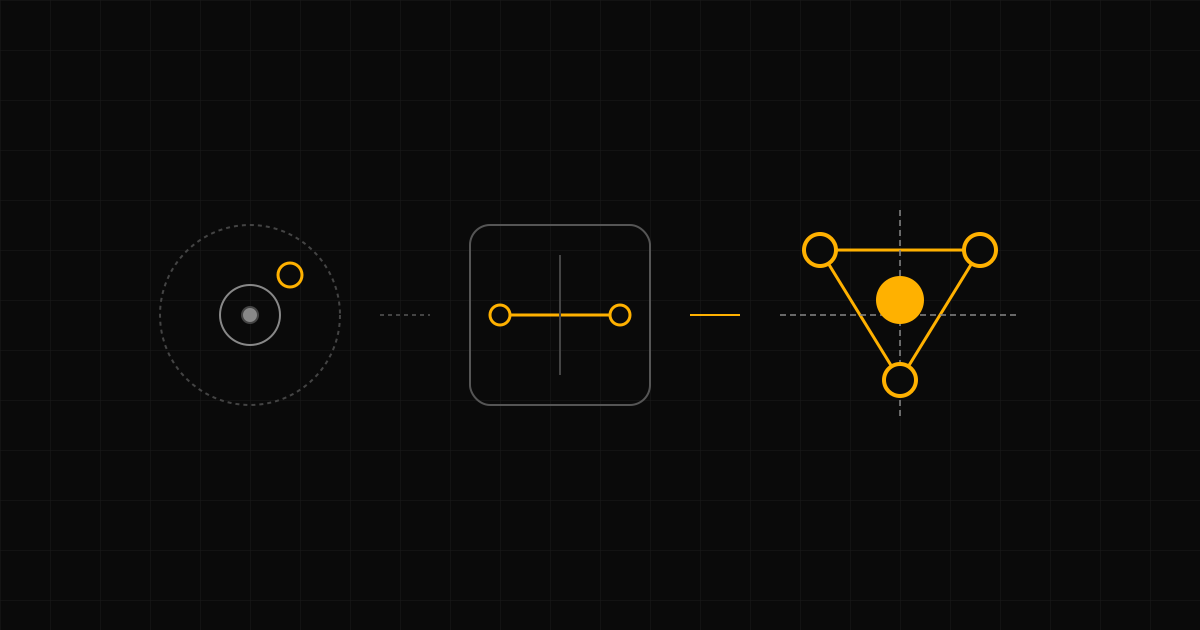
To make informed decisions, executives must understand the clear mechanical boundaries between these three tiers of software. The debate of ai agents vs copilots vs operating systems is not about which technology is superior. It is about understanding the exact scope of problem each tool is designed to solve.
Tier 1: Copilots (Individual productivity)
A copilot is an assistant designed to augment a single human worker at their keyboard. It lives inside an individual application—such as a word processor, an email client, a spreadsheet, or a customer service console.
The defining characteristic of a copilot is that a human being remains in the driver's seat at all times. The copilot does not act on its own. It waits for a person to highlight text, type a prompt, or click an icon.
What copilots do well
- Drafting and summarizing: Generating initial email replies, summarizing lengthy legal briefs, or drafting executive memos based on bullet points.
- Formulas and queries: Helping an analyst construct a complex spreadsheet calculation or write a database query.
- Code generation: Suggesting syntax and completing functions for software developers.
Where copilots stop
Copilots improve personal throughput, but they do not alter operational workflows. If an invoice requires approval, matching against a purchase order, entry into an ERP, and a confirmation email to the vendor, a copilot will help an accountant write the confirmation email faster.
It will not, however, notice the invoice arriving in the shared mailbox, log into the ERP to verify line items, or advance the transaction through the approval chain. The human remains the operational bottleneck.
If your core challenge is that individual knowledge workers need help producing documents faster, a copilot is the right investment. If your challenge is that business processes stall between people, copilots will not solve your problem.
Tier 2: AI Agents (Bounded, end-to-end task execution)
An AI agent moves beyond passive assistance to autonomous execution. Unlike a copilot, an agent is not waiting for a keystroke from a user. It is assigned a specific operational goal, given access to necessary software tools, and authorized to execute a defined process from start to finish.
An agent observes an incoming trigger, interprets the situation, formulates a multi-step plan, and takes actions across software systems to complete the objective within predefined guardrails.
What an isolated agent looks like in practice
Consider an inbound lead qualification agent:
- It monitors incoming web inquiries, emails, and direct messages around the clock.
- When a prospect reaches out, the agent evaluates the inquiry against the company's ideal customer profile.
- It cross-references the prospect's company details against corporate registries or internal databases.
- If qualified, it proposes available meeting slots on an account executive's calendar, drafts a calendar invite, and logs the opportunity in the CRM.
- If unqualified, it sends a polite introductory resource packet and closes the ticket.
Throughout this sequence, no human had to initiate the process or manually move data between tabs. The agent performed the defined task end to end.
Where isolated agents break down
The limitation of a single agent is that business operations rarely exist in isolation.
What happens after that sales lead is closed? The newly converted client must be handed over to legal for contracts, to finance for billing setup, and to operations for project onboarding. If each department deploys an isolated, point-solution agent, the handoffs between those agents quickly fail.
The sales agent uses one data structure, the billing agent uses another, and neither has visibility into whether the fulfillment team has capacity to take on the work. You end up with a collection of fast, automated silos that still require humans to arbitrate disputes and manually transfer context between them.
Tier 3: The AI Operating System (Connected enterprise operations)
An AI operating system is the orchestration layer that connects multiple specialized agents across departments into a unified, coordinated operation.
It solves the coordination problem that isolated agents create. Rather than deploying disconnected bots in sales, finance, and logistics, an AI operating system establishes:
- Shared context: Every agent operates with awareness of what is happening across the entire organization. The billing agent knows what the sales agent promised in the signed agreement. The fulfillment agent knows when payment terms have been validated by finance.
- Governance and guardrails: Standardized access controls, rate limits, and approval protocols across all departments. Security policies are defined once at the operating system level, rather than configured piecemeal inside five different vendor tools.
- Persistent organizational memory: A centralized knowledge layer that records customer preferences, past precedent decisions, and institutional workflows so that every agent shares the same operational playbook.
- Universal system integration: A single connective tissue that interfaces with your ERP, CRM, banking channels, email servers, and internal databases, allowing agents to execute cross-functional workflows seamlessly.
In an AI operating system, agents do not run in private vacuums. They function like specialized teams within a disciplined company, handing off responsibilities smoothly and escalating to human executives whenever a situation exceeds authorized boundaries.
A practical framework: Which one does your business need?
To determine where to focus your resources, evaluate your primary operational pain points against this simple decision matrix:
Scenario A: Your teams spend too much time writing, editing, or analyzing documents
- Root issue: Individual cognitive friction and manual drafting drag.
- Correct solution: Copilots. Equipping your analysts, marketers, and engineers with in-app copilots will immediately compress drafting times and accelerate personal output.
Scenario B: A single, high-volume process is creating a severe operational bottleneck
- Root issue: Repetitive, well-defined administrative work within one department (e.g., initial candidate resume screening, tier-1 customer support triage, or standard vendor invoice verification).
- Correct solution: A Dedicated AI Agent. Implementing a targeted agent with clear parameters will eliminate the backlog without requiring broader organizational restructuring.
Scenario C: Hand-offs between departments are slow, chaotic, and dependent on manual tracking
- Root issue: Operational coordination breakdown. Sales promises do not reach fulfillment, invoices sit disputed because customer service is out of the loop, and management relies on manual weekly status meetings to understand what is happening.
- Correct solution: An AI Operating System. Deploying a coordinated operational layer across sales, finance, operations, and fulfillment is the only way to ensure that work moves continuously through the enterprise without slipping through the cracks.
Moving beyond technology labels
The modern enterprise does not have to choose exclusively between copilots, agents, and operating systems. In a mature operational architecture, they reinforce one another:
Knowledge workers use copilots to draft strategy and refine communications. Dedicated agents execute routine high-frequency tasks autonomously. And the AI operating system orchestrates the entire operational machine, ensuring that data flows cleanly, decisions remain within policy, and human leadership retains full visibility and control.
By understanding what each layer does, business leaders can stop chasing generic software buzzwords and start building an operational infrastructure that truly scales.
Find out what your business can stop doing by hand.
In 20 minutes, we map your workflow and show you where an AI OS fits. No pitch. Just the diagnosis.
Book a call