Owner Reporting Without the Weekly Meeting: How an AI System Builds the Briefing
Every Monday morning across thousands of mid-sized and large enterprises, leadership teams gather for the same ritual: the executive status meeting.
For two to three hours, department heads present slides, read bullet points, and explain what happened in their operational areas over the prior seven days. The head of sales reviews pipeline conversions. The head of operations reports on delivery backlogs. The financial controller provides updates on cash flow and outstanding client invoices.
By the time the meeting concludes, half the working day has vanished. More importantly, the meeting rarely produces strategic decisions. It functions merely as an expensive human data-gathering session—a meeting convened simply to find out what is going on inside the company.
Modern ai executive reporting replaces this routine with continuous, synthesized operational visibility delivered directly to leadership desks.
The problem of siloed operational reality
Business leaders do not call status meetings because they enjoy sitting in conference rooms. They call them because corporate truth is scattered across disconnected software tools:
- Sales data lives inside customer relationship management software and proposal tools.
- Financial status sits inside enterprise accounting ledgers and online banking dashboards.
- Work-in-progress is tracked across project management boards and engineering tickets.
- Client sentiment is buried across support desks, client emails, and messaging channels.
Because these platforms do not communicate with each other, no single screen provides an integrated picture of operational health.
To bridge this gap, department heads task their analysts with manually exporting CSV files on Friday afternoons. Staff spend hours copying numbers into presentation slides.
This reporting model suffers from three fundamental flaws:
- Information decay: The numbers presented on Monday morning represent a historical snapshot. Operational events that occurred over the weekend or early Monday are completely omitted.
- Selective filtering: When humans build manual reports, they naturally emphasize positive achievements while softening or delaying bad news. Critical delivery delays or client disputes remain hidden until they become emergencies.
- Severe productivity loss: Requiring senior executives to spend hours assembling slides pulls them away from direct customer engagement and operational problem-solving.
How a connected system builds the executive briefing
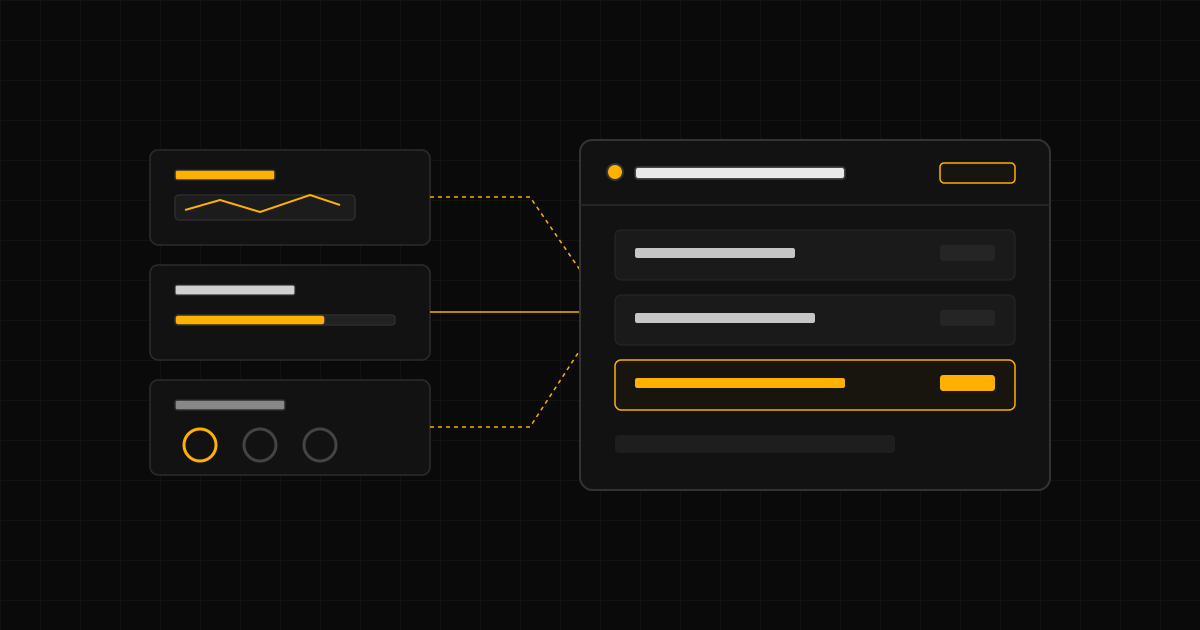
An AI operating system approaches management reporting differently. Instead of waiting for human staff to export data, autonomous agents connect directly to the operational tools your company already uses.
The system monitors key data streams continuously, synthesizing information across departmental boundaries:
- Cross-system correlation: The system connects sales milestones with operational capacity. When sales closes a significant contract in the CRM, the agent checks project management boards to determine whether fulfillment teams have the bandwidth to deliver on time.
- Proactive anomaly detection: Rather than flooding leadership with endless charts, the system tracks normal operational variance. It alerts the executive only when metrics breach expected thresholds—such as an unexpected dip in collections or an abnormal spike in client support tickets.
- Plain-language executive summaries: The system does not deliver raw database dumps. It synthesizes operational facts into concise, narrative briefings highlighting key changes, risks, and required interventions.
What a continuous executive briefing looks like
Instead of sitting through generic departmental slide presentations, business leaders receive an organized morning briefing delivered directly to their communication channel of choice.
The briefing answers the four critical operational questions every owner needs to understand:
1. Liquidity and cash posture
- Opening bank cash position reconciled across primary operating accounts.
- Incoming collections projected for the current week based on verified payment promises.
- Critical supplier disbursements scheduled for release over the next five business days.
2. Commercial pipeline momentum
- High-priority enterprise opportunities that advanced or stalled in the last 72 hours.
- Contracts awaiting client signature and their elapsed review time.
- Repetitive objections surfacing across early-stage sales calls.
3. Fulfillment and delivery milestones
- Active client projects progressing on schedule versus projects encountering delivery blocks.
- Departmental capacity utilization across primary delivery teams.
- Supply chain alerts or vendor shipment delays impacting operational deadlines.
4. Client relationship health
- Major customer accounts that logged escalated support tickets during the past week.
- Unbilled client scope changes requiring formal change-order documentation.
- Accounts eligible for contract renewals over the upcoming sixty-day window.
This structured synthesis provides immediate operational clarity without requiring a single meeting or spreadsheet export.
Shifting from status reporting to strategic execution
Eliminating the weekly status meeting does not eliminate executive communication. It elevates it.
When management teams possess real-time visibility into baseline operations, meetings transform from passive information dumps into active problem-solving sessions:
| Traditional Status Meeting | Modern Briefing-Led Review |
|---|---|
| "What was our total revenue last week?" | "Revenue is tracking on target; how do we expand capacity?" |
| "Which client invoices remain unpaid?" | "Account X is disputing invoice terms; let's agree on our commercial response." |
| "Are our delivery projects on schedule?" | "Project Y has hit a supplier block; let's reallocate engineering resources today." |
| 2–3 hours spent reviewing historical facts | 30 minutes focused purely on high-impact strategic decisions |
A business leader's time is the most valuable asset in the enterprise. By deploying an autonomous AI system that connects existing data sources and prepares continuous executive intelligence, leadership regains hours of focused time while running the organization with sharper operational control.
Find out what your business can stop doing by hand.
In 20 minutes, we map your workflow and show you where an AI OS fits. No pitch. Just the diagnosis.
Book a call