Where Work Gets Stuck Between Departments, and What a Connected System Does About It
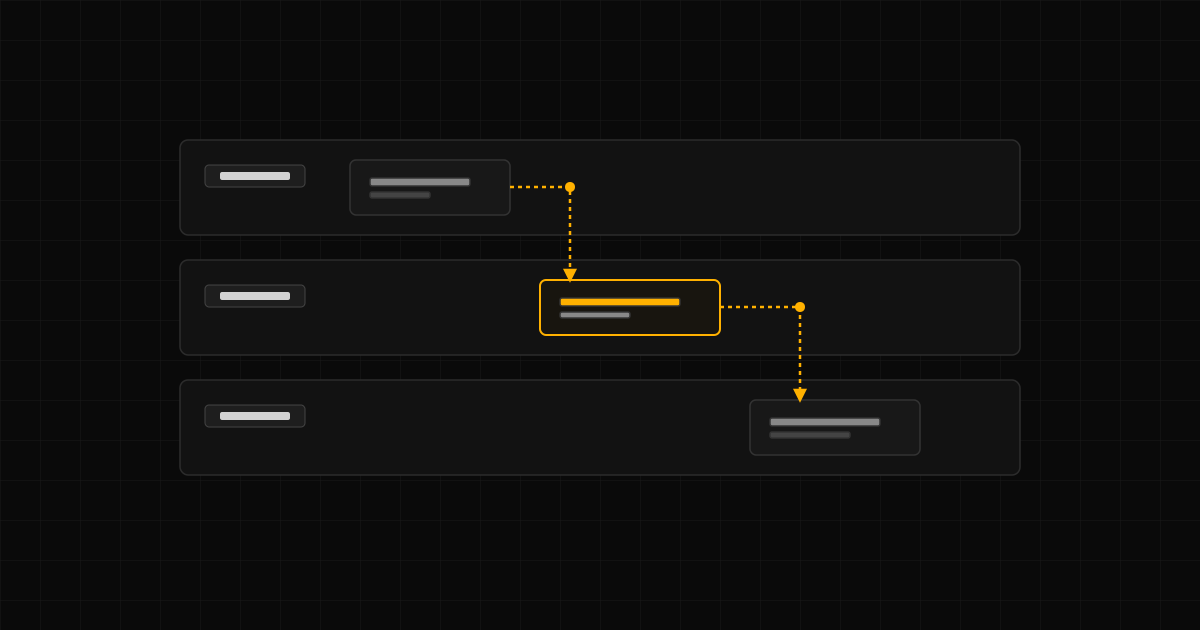
When business leaders examine internal productivity, they frequently look inside departmental boundaries. They evaluate sales conversion rates, review operational turnaround times, and examine finance processing cycles.
On paper, every individual department often appears to be functioning normally. Sales representatives hit their activity metrics, operations engineers resolve their assigned tasks, and accountants process incoming receipts.
Yet despite these departmental successes, overall commercial delivery remains slow. Client onboarding takes four weeks instead of four days. Customer billing statements arrive weeks after services are delivered. Critical client requests fall through administrative cracks.
The reason is simple: operational friction rarely lives inside a department. It lives in the gaps between them.
Implementing cross-department workflow automation through a connected AI system bridges these operational chasms, allowing work to flow continuously across the entire enterprise.
The three most expensive departmental handoffs
Whenever responsibility for a customer or project transfers from one team to another, momentum decelerates. Without a connected coordination layer, these transitions rely on human staff remembering to send emails, copy files, and update multiple software interfaces.
Three specific departmental handoffs account for the vast majority of operational delays:
1. Sales to client onboarding
The commercial team celebrates signing a new corporate client. The contract is marked "closed-won" inside the customer relationship management database.
Then the handoff stalls:
- The sales representative forgets to forward customized client notes or agreed scope exceptions to the implementation team.
- The onboarding team does not know the contract was signed until the client emails asking when their project will begin.
- Two weeks after signing, implementation engineers schedule a kickoff call only to discover that necessary system credentials and access permissions were never requested from the client.
The customer's initial impression of your company is marred by disorganization, simply because the CRM and project management tools operate in complete isolation.
2. Operations to finance and revenue recognition
Delivery teams complete project milestones, ship orders, or provide consulting deliverables.
In an ideal workflow, billing happens immediately upon completion. In practice:
- Operations tracks progress in specialized technical software or project trackers that the finance department never views.
- Because engineers focus on delivery rather than clerical billing notices, completed work sits unbilled for thirty to sixty days.
- When finance finally issues the invoice at month-end, the customer questions charges for work delivered weeks earlier, triggering disputes that delay cash collections.
Unbilled completed work represents stranded working capital, directly caused by the communication barrier separating project teams from the general ledger.
3. Customer support to product engineering
Client support teams handle daily inquiries, resolving straightforward requests and cataloging technical issues.
When clients report recurring technical problems or delivery bottlenecks:
- Support staff record the feedback inside ticketing software.
- Engineering teams plan their development sprints inside separate issue trackers.
- Unless a major client escalates directly to an executive, support tickets rarely translate into prioritized engineering fixes.
Customer churn increases not because engineering is incapable of fixing problems, but because the handoff between support and engineering is fundamentally broken.
Why single-tool automation makes the problem worse
In response to these delays, department heads often purchase specialized point solutions.
Sales acquires an AI email assistant. Finance purchases an automated accounts payable tool. Operations adopts automated project management workflows.
While each tool may improve localized task efficiency, this approach actually deepens enterprise silos:
| Point Solution Approach | Connected System Approach |
|---|---|
| Siloed departmental databases | Shared operational intelligence |
| Brittle webhooks that fail silently | Autonomous agents that understand context |
| Staff spend hours copying data between tools | Work moves automatically across software boundaries |
| Visibility limited to individual team heads | Unified executive visibility across all departments |
Automating an isolated task inside a broken workflow simply moves bottlenecks from one desk to another. Real operational efficiency requires a system that monitors and acts across the handoff itself.
How an AI operating system bridges departmental boundaries
An AI operating system does not ask your business to discard existing software tools or embark on a multi-year enterprise resource planning replacement. Instead, it functions as an autonomous coordination layer running across the software systems you already use.
By integrating sales, operations, finance, and support into a unified execution layer, an AI system coordinates cross-departmental handoffs in real time:
Instant post-sale orchestration
The moment a commercial contract executes in the CRM, the autonomous agent reads the agreement, extracts custom commitments, and automatically creates the onboarding workspace. It provisions standard client accounts, drafts introductory briefing notes for the assigned project lead, and schedules the initial kickoff milestone without requiring manual intervention from the sales representative.
Automated milestone billing
As operations completes project milestones or signs off on delivery receipts in project management tools, the system detects the event. It verifies completion against contract payment schedules, drafts the corresponding invoice in your accounting software, and submits it for routine finance review. Work is invoiced within minutes of delivery, accelerating cash conversion.
Unified customer intelligence
When a client contacts any team—whether asking a billing question, requesting technical support, or inquiring about expanding services—the AI system provides complete, unified context. The representative immediately sees active projects, recent support history, outstanding invoices, and contract terms in a single view.
The compounding return of connected operations
Enterprises do not gain operational leverage by making individual employees type slightly faster inside isolated software tools. They gain leverage by removing the clerical handoffs that cause work to stall between teams.
When sales, operations, and finance communicate through an autonomous, connected operational layer, internal friction disappears:
- Client onboarding accelerates from weeks to hours.
- Revenue recognition occurs immediately upon delivery.
- Senior staff stop functioning as manual data bridges and focus their energy on customer relationships and high-value strategic growth.
By connecting existing software tools into a single, cohesive operating layer, forward-thinking enterprises build an agile operational foundation that scales smoothly and profitably without multiplying administrative overhead.
Find out what your business can stop doing by hand.
In 20 minutes, we map your workflow and show you where an AI OS fits. No pitch. Just the diagnosis.
Book a call