Done-for-You AI Implementation vs Self-Serve Tools: Why the Outcome Is the Product
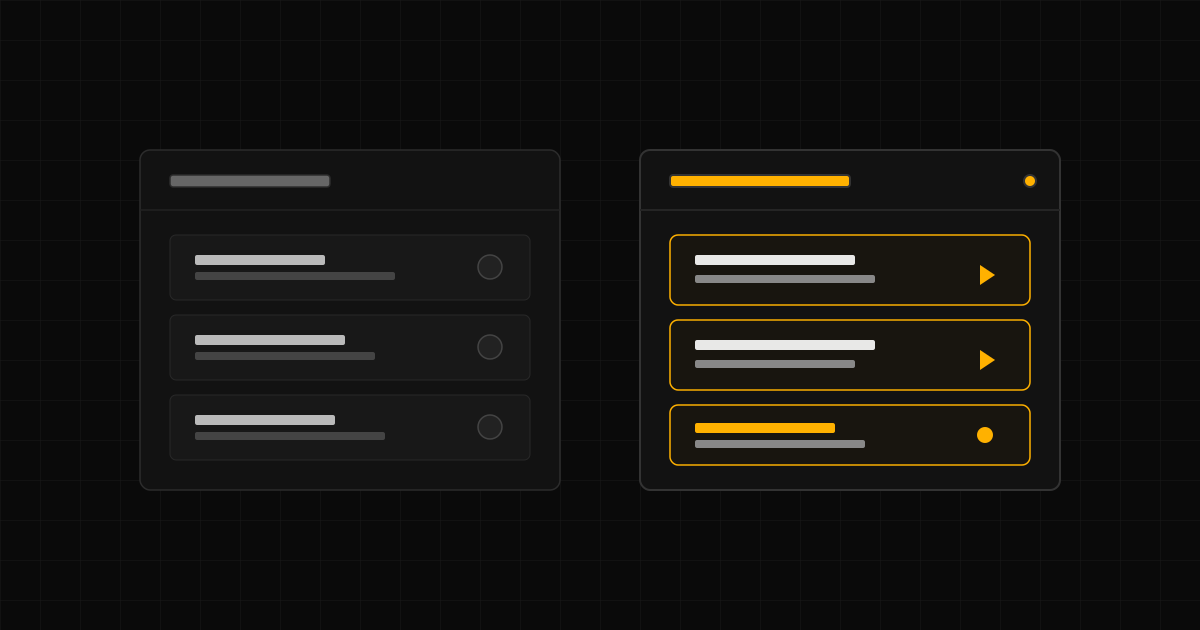
When enterprise leadership decides to deploy artificial intelligence across company operations, they encounter two fundamentally divergent procurement paths.
The first path is the self-serve software model. The company purchases software licenses from a software-as-a-service vendor, receives login credentials, and tasks internal staff with configuring integrations, building automated workflows, and managing maintenance.
The second path is the done-for-you implementation model. The enterprise engages a specialized partner who evaluates operational workflows, builds and customizes the underlying agents, connects them across existing tools, and actively operates and maintains the system as a managed service.
Both approaches have distinct commercial applications. However, business leaders frequently underestimate the hidden operational responsibilities attached to the self-serve model.
Understanding the real tradeoffs between self-serve software and done for you ai implementation requires looking beyond initial rollout speed and examining who ultimately carries accountability for the operational outcome.
The self-serve model: Speed, control, and internal overhead
The self-serve model represents the dominant distribution pattern of modern enterprise software. For straightforward, single-department tasks, it offers undeniable advantages:
The genuine strengths of self-serve tools
- Low entry friction: An internal team member can sign up, enter a credit card or purchase order, and begin experimenting within minutes without extensive executive approvals.
- Immediate autonomy: Internal specialists who possess technical curiosity can build simple automations tailored to their immediate individual preferences without coordinating with external parties.
- Standardized features: Top-tier self-serve platforms provide polished interfaces, extensive template libraries, and broad public community forums.
The hidden operational cost: Internal maintenance debt
The challenge with self-serve tools emerges when organizations attempt to automate mission-critical, cross-departmental operations.
According to the Salesforce and MuleSoft 2026 connectivity benchmark, the average enterprise manages 957 distinct applications across its software estate, yet only 27% of these tools are connected to one another. When an enterprise purchases a self-serve automation tool, it is introducing application number 958 into an environment that is already severely fragmented.
The operational reality of managing self-serve automation internally reveals several ongoing friction points:
- The skills gap: Building resilient autonomous workflows requires nuanced engineering expertise: managing token context windows, handling structured data validation, implementing deterministic fallback logic, and monitoring API rate limits. Expecting full-time financial controllers or operations directors to master these technical disciplines creates frustration.
- Silent failure and maintenance drag: When a third-party software vendor updates a user interface or modifies an API endpoint, self-serve workflows break. Because internal teams treat the automation tool as a secondary responsibility, failures often go unnoticed until a supplier complains of an unpaid bill or a client onboarding stalls.
- Workflow sprawl: Without centralized architectural governance, different departments build competing, overlapping automations. Sales creates one zap, marketing builds another, and operations maintains a third. When errors occur, untangling data dependencies consumes substantial IT hours.
With self-serve tools, the software vendor sells access to capability. The responsibility for making that capability deliver business value rests entirely on your internal payroll.
The done-for-you model: Buying the operational result
The done-for-you implementation model fundamentally redefines the commercial contract. Instead of purchasing access to a digital toolkit, the enterprise engages an accountable partner to deliver an operational result.
The tradeoffs of the done-for-you model
An honest comparison must acknowledge the trade-offs:
- Higher initial commitment: Engaging an implementation partner requires deliberate executive alignment, discovery reviews, and security evaluations. It cannot be launched impulsively by an individual junior employee on an afternoon whim.
- Collaborative discovery: Your operational leaders must invest several hours upfront walking the implementation team through real-world edge cases, governance rules, and legacy tool quirks.
The core advantage: Accountable operational ownership
In return for this deliberate engagement, the done-for-you approach eliminates the burden of internal system maintenance:
- Customized to messy reality: Enterprise operations rarely match clean software templates. Companies run custom ERP instances, older accounting databases without public APIs, and bespoke client contracts. A dedicated partner engineers the system to work inside your existing software stack, navigating legacy screens and user interfaces directly rather than demanding expensive IT migrations.
- Engineered for exceptions: In production business operations, approximately 20% of transactions contain ambiguities or missing fields. A done-for-you partner builds rigorous exception-handling architecture: isolating discrepancies, gathering context, and routing plain-language approval summaries to human executives rather than crashing silently.
- Continuous operational monitoring: The partner operates, monitors, and optimizes the system. When an underlying vendor interface updates, an API endpoint changes, or a model requires fine-tuning, the partner resolves the issue proactively. Internal staff never spend weekends debugging integration recipes.
Direct comparison: Evaluating the two models
To choose the appropriate model for your organization, evaluate how each approach handles core operational dimensions:
| Operational Dimension | Self-Serve Software | Done-for-You Implementation |
|---|---|---|
| Product Delivered | A software interface and access credentials | A functioning, verified operational outcome |
| Integration Execution | Performed by your internal staff | Designed, built, and tested by dedicated engineers |
| Legacy Tool Handling | Limited to pre-built native API connectors | Custom-engineered to navigate modern APIs and legacy screens |
| Maintenance Burden | Internal employees must monitor and fix breaks | Managed and monitored continuously by the partner |
| Accountability | The vendor guarantees uptime; you guarantee outcomes | The partner is accountable for the operational result |
Matching the model to the operational stake
Choosing between self-serve tools and a done-for-you implementation is not a dogmatic decision. It depends entirely on the criticality of the workflow.
For low-stakes, localized departmental convenience—such as formatting a team survey or sending an automated birthday message in a chat channel—self-serve software is an excellent, cost-effective choice. The impact of a failure is negligible, and internal staff can manage the setup easily.
However, when a workflow touches core business vitals—reconciling multi-million dollar supplier accounts, processing complex commercial purchase orders, onboarding enterprise clients, or synthesizing executive liquidity briefings—the cost of failure is severe.
For mission-critical operations, serious mid-to-large businesses do not want another software subscription to manage. They want an accountable implementation partner who ensures that the underlying business outcome is delivered reliably, day in and day out.
Find out what your business can stop doing by hand.
In 20 minutes, we map your workflow and show you where an AI OS fits. No pitch. Just the diagnosis.
Book a call