Lead Handling at Volume: What Changes When Enquiries Double
When an enterprise runs a high-performing marketing campaign or launches in a new regional market, incoming customer interest surges. What was once a steady stream of fifty inquiries each week accelerates to two hundred, then five hundred.
To senior executives, this surge looks like an unmitigated commercial success.
Inside daily sales operations, however, sudden volume expansion often triggers organizational paralysis. The informal procedures that functioned adequately at low volumes begin to crack under operational weight.
Inquiries sit untouched in shared inboxes for days. High-value enterprise prospects receive delayed, generic responses while junior representatives spend hours fielding inquiries from unqualified buyers. Commercial momentum degrades, customer acquisition costs multiply, and sales teams experience acute burnout trying to keep pace with manual intake.
Operating a resilient lead management process at scale requires recognizing that scaling volume is not a matter of asking human representatives to type faster. It requires re-architecting the operational intake chain so that speed, qualification, and routing operate systematically regardless of volume.
Why low-volume sales habits break under pressure
At fifty inquiries a week, human coordinators and sales representatives compensate for broken operational systems through manual vigilance.
A sales coordinator reads every incoming submission, manually checks LinkedIn to verify the prospect's company size, searches the CRM to confirm account ownership, and types an individualized introductory email. If an inquiry sits unanswered for a day, someone notices the message during an afternoon inbox scan and forwards it to an account executive.
When volume doubles or triples, this manual handling structure collapses for three structural reasons:
1. Triage fatigue and quality degradation
A human employee reviewing ten inquiries a day reads each submission carefully. A human employee facing one hundred unread inquiries scans headlines under intense time pressure. Nuanced enterprise requests get lumped together with generic student or vendor inquiries, resulting in superficial triage.
2. Disconnected application sprawl
According to the Salesforce and MuleSoft 2026 connectivity benchmark, the average enterprise manages 957 distinct applications, with only 27% connected to one another.
When incoming lead data must manually travel between website form engines, email servers, customer relationship management software, calendar tools, and internal chat applications, the manual transcription overhead scales exponentially with volume. Staff spend their entire working day moving records between tabs rather than speaking with prospective buyers.
3. Asymmetrical opportunity loss
Not all inquiries carry equal commercial value. In enterprise business, 10% of inbound inquiries often represent 80% of potential pipeline value.
When all inquiries sit in a flat, unprioritized chronological queue, high-value enterprise accounts wait behind small, low-margin requests. While your team is busy answering basic questions for an unqualified prospect, a major enterprise buyer waits forty-eight hours for a response and signs with a competitor.
The four structural stages of volume lead handling
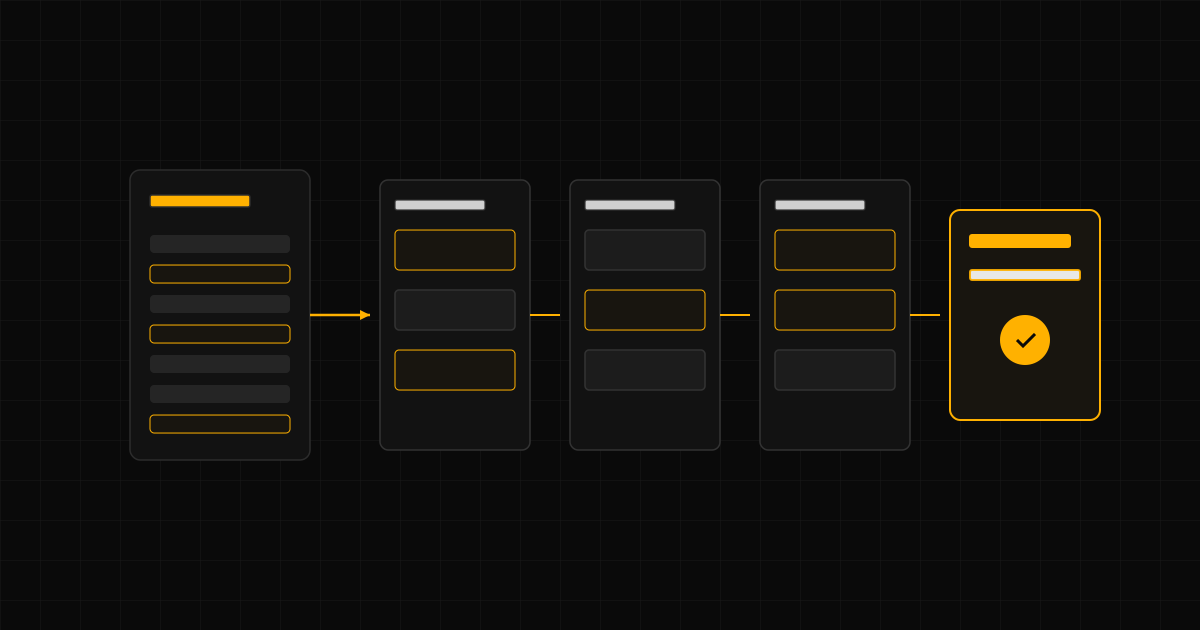
Scaling an inbound commercial engine requires executing four distinct operational disciplines in a strict, automated sequence:
Inbound Inquiry Arrival
          │
          ▼
Stage 1: Instant Contextual First Response (< 2 minutes)
          │
          ▼
Stage 2: Automated Background Qualification & Enrichment
          │
          ▼
Stage 3: Deterministic Account Routing & Calendar Booking
          │
          ▼
Stage 4: Systematic Multi-Touch Relationship Momentum
Stage 1: The instantaneous, contextual first reply
Speed to response is the primary determinant of inbound conversion. When an enterprise buyer submits an inquiry, their commercial intent is acute.
At volume, first response must be automated, but it cannot be a sterile auto-responder:
- Within two minutes of submission, the system delivers an individualized response confirming receipt.
- The message contextually references the specific operational domain, technical requirement, or service tier the prospect selected in their form submission.
- It provides immediate, relevant technical documentation or case references, establishing immediate operational authority while setting expectations for the next step.
Stage 2: Automated background qualification and enrichment
Human representatives should never spend time manually researching company headcounts, corporate jurisdictions, or public financial disclosures.
As soon as an inquiry enters the system, background agents enrich the record automatically:
- Querying corporate registries to identify employee headcount, operating locations, and primary industry classifications.
- Cross-referencing internal CRM archives to confirm whether the account has historical contracts, past support tickets, or active commercial dialogues.
- Scoring the inquiry against established ideal customer profile parameters: identifying whether the prospect represents an enterprise tier, a mid-market account, or an out-of-scope inquiry.
By the time a human seller examines the record, complete commercial context is already pre-assembled.
Stage 3: Deterministic account routing and calendar orchestration
Once an inquiry is qualified, manual email ping-pong to schedule an introductory call must be eliminated:
- The system checks internal governance rules: account territory, industry vertical, and existing account executive assignments.
- For high-priority qualified leads, the prospect is immediately presented with live calendar availability for the designated senior account director.
- Inquiries that do not meet enterprise criteria are automatically routed to self-service resources, junior qualifying desks, or automated educational sequences.
Enterprise buyers book meetings in seconds, while senior sales professionals' calendars populate with pre-qualified consultations.
Stage 4: Systematic multi-touch momentum
In high-volume environments, prospects frequently fail to complete their initial booking or miss scheduled calls.
When sales reps manage follow-ups manually, unbooked leads get forgotten after a single attempt. An automated system maintains persistent, relationship-sensitive momentum:
- Delivering polite, value-additive follow-ups on day two, day five, and day ten across multiple communication channels.
- Providing additional relevant operational insights or asking clarifying questions to encourage engagement.
- Alerting the assigned representative only when the prospective buyer re-engages or replies.
Turning inbound volume into commercial leverage
Expanding customer inquiry volume should be an enterprise catalyst, not an administrative operational crisis.
This is the kind of work Kalvron builds systems to run continuously. By deploying autonomous agents that manage instant contextual intake, background enrichment, intelligent routing, and persistent follow-up directly inside existing CRM and communication platforms, businesses absorb double or triple the inquiry volume—scaling pipeline and revenue without multiplying administrative headcount.
Find out what your business can stop doing by hand.
In 20 minutes, we map your workflow and show you where an AI OS fits. No pitch. Just the diagnosis.
Book a call